The Portable Account Core for  Ethereum
The Hegotá upgrade adds a new account type to Ethereum, and every wallet has to rebuild for it. PACE is an industry effort to agree on the core of that account: one spec every wallet implements and a few contracts they all share. Your account then opens in any wallet, and any hardware wallet can read what you sign.
Why this needs to exist
Each time Ethereum got a new kind of account, every wallet built its own version.
2023 ERC-4337
A separate account in every wallet
Accounts rarely opened in another wallet.
2025 EIP-7702
New code for old addresses
Every wallet wrote its own again, and the account’s original key still controls everything.
Hegotá EIP-8141This time
A new account in the protocol
Hegotá is expected in 2027, and every wallet rebuilds for it at the same moment. After it, account features ship as contracts with no fork, so nothing makes wallets rebuild together again.
If every wallet builds its own
- Wallet A
- Wallet B
- Wallet C
- Account A
- Account B
- Account C
- Apps
- Hardware wallets
- Explorers
Apps, hardware wallets and explorers support each account separately.
If every wallet ships the same core
- Wallet A
- Wallet B
- Wallet C
PACE
- Apps
- Hardware wallets
- Explorers
Apps, hardware wallets and explorers support the core once.
Users
Switching wallets means starting over.
No other wallet can read your keys, so you move every asset by hand.
Explorers
Explorers can’t show what an account did.
Without a decoder for each wallet, a key change shows up as an unlabelled call.
Hardware wallets
Hardware wallets show raw bytes.
For an account the device doesn’t know, you approve hex you can’t read.
Security
Transaction checks work in only some wallets.
Assertions, the checks the chain runs on a transaction’s result, need one encoding. Otherwise hardware wallets can’t show them and apps can’t rely on them.
What we need to do
PACE is one spec plus a few shared contracts, starting with EIP-8130’s Keystore, the contract that holds every account’s keys. We build the contracts and the parts apps and hardware wallets read, and other teams ship the rest.
Apps and tools
What apps, devices and explorers read
Give apps one API for PACE
Us, with the ERC-5792 authors
Write the clear signing metadata
for the clearsigning.org registry
Us, with the ERC-7730 group
Get explorers and security tools to read PACE
Explorers, simulators, security tools
Contracts
Deployed once, shared by every wallet
Deploy the Keystore on Ethereum
Us · no fork
Build the Ethereum account that reads the Keystore
Us · no fork
Build the threshold authenticator for multisigs and co-signers
Us · no fork
Pay gas in tokens like USDC
least settled item
A working group · new ERC
Network rules
Node policy, no fork
Allow Keystore reads in the public mempool
proposed in EIPs#12340
L1 client teams
Ship parallel nonces
EIP-8250 is expected in Hegotá
EIP-8250 authors, L1 client teams
Protocol
Ships with a fork or an L2 upgrade
Get every L2 to support assertions
EIP-7906, expected on L1 in Hegotá
Each L2, the EIP-8130 authors
Adjust EIP-8141 for app permissions
The EIP-8141 authors
What every user gets
These features come with PACE, so they work in every wallet. The screens are from the interactive mockup.
Move to post-quantum keys
Quantum computers could break ECDSA, the signature behind every Ethereum key today. In EIP-8130 a contract verifies each key’s signature, so a post-quantum key is just another key, and you keep your address and funds.
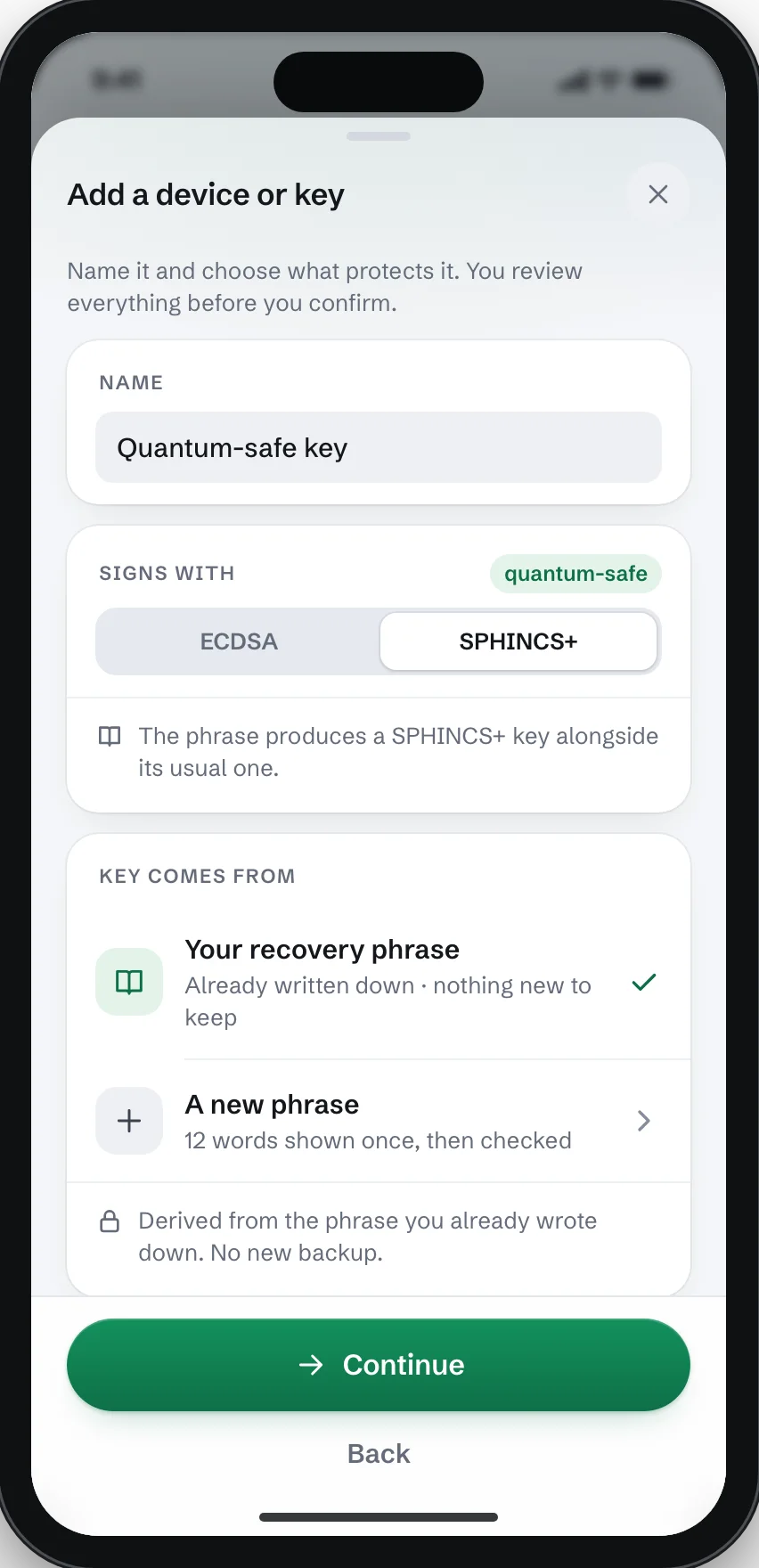
Post-quantum keys
Add one next to your current keys. Every wallet that opens the account sees it.
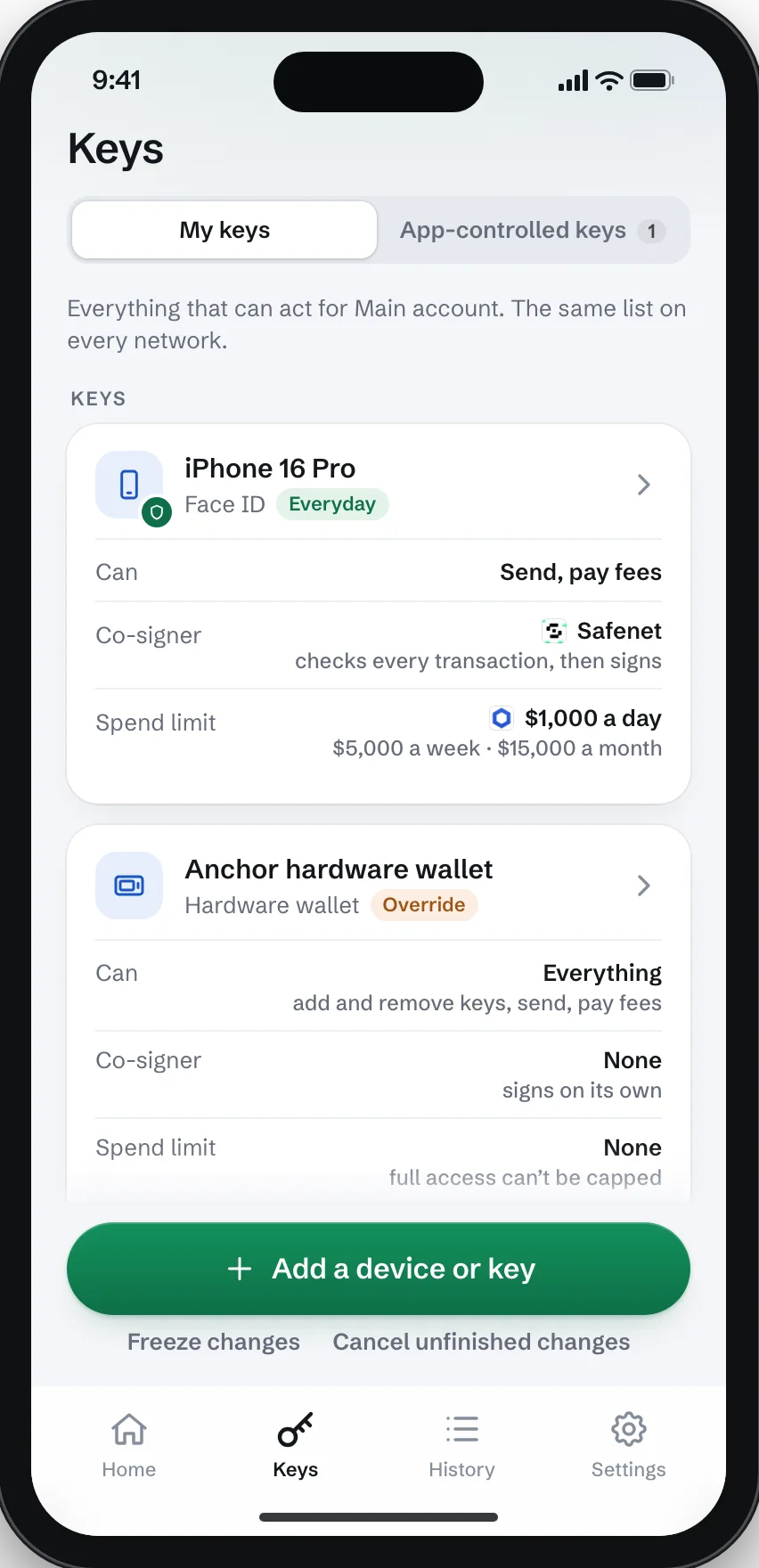
Retire the old keys
Remove the ECDSA keys and keep the same address.
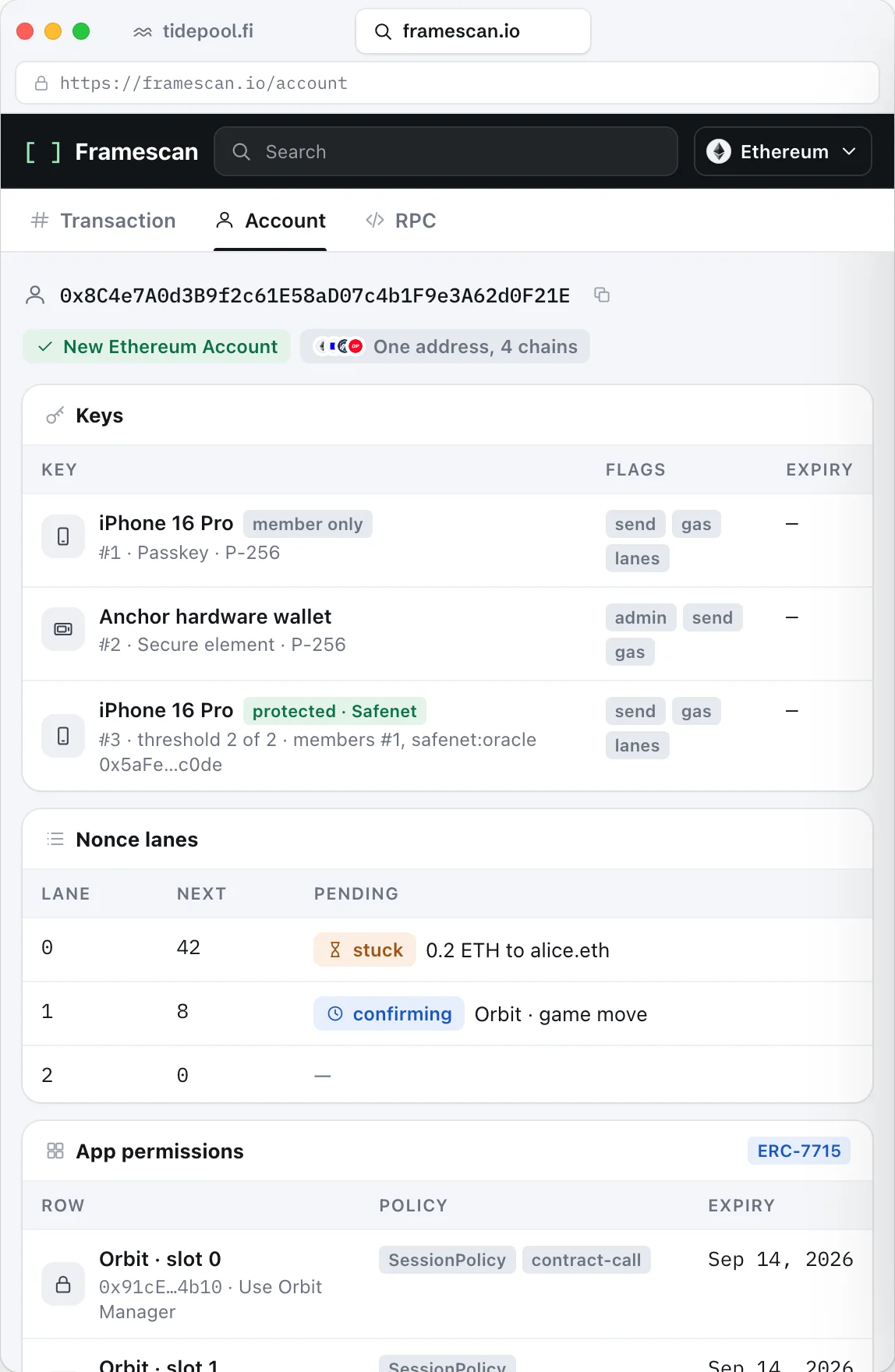
New schemes without a fork
Signature schemes ship as contracts, so a better one needs no hard fork.
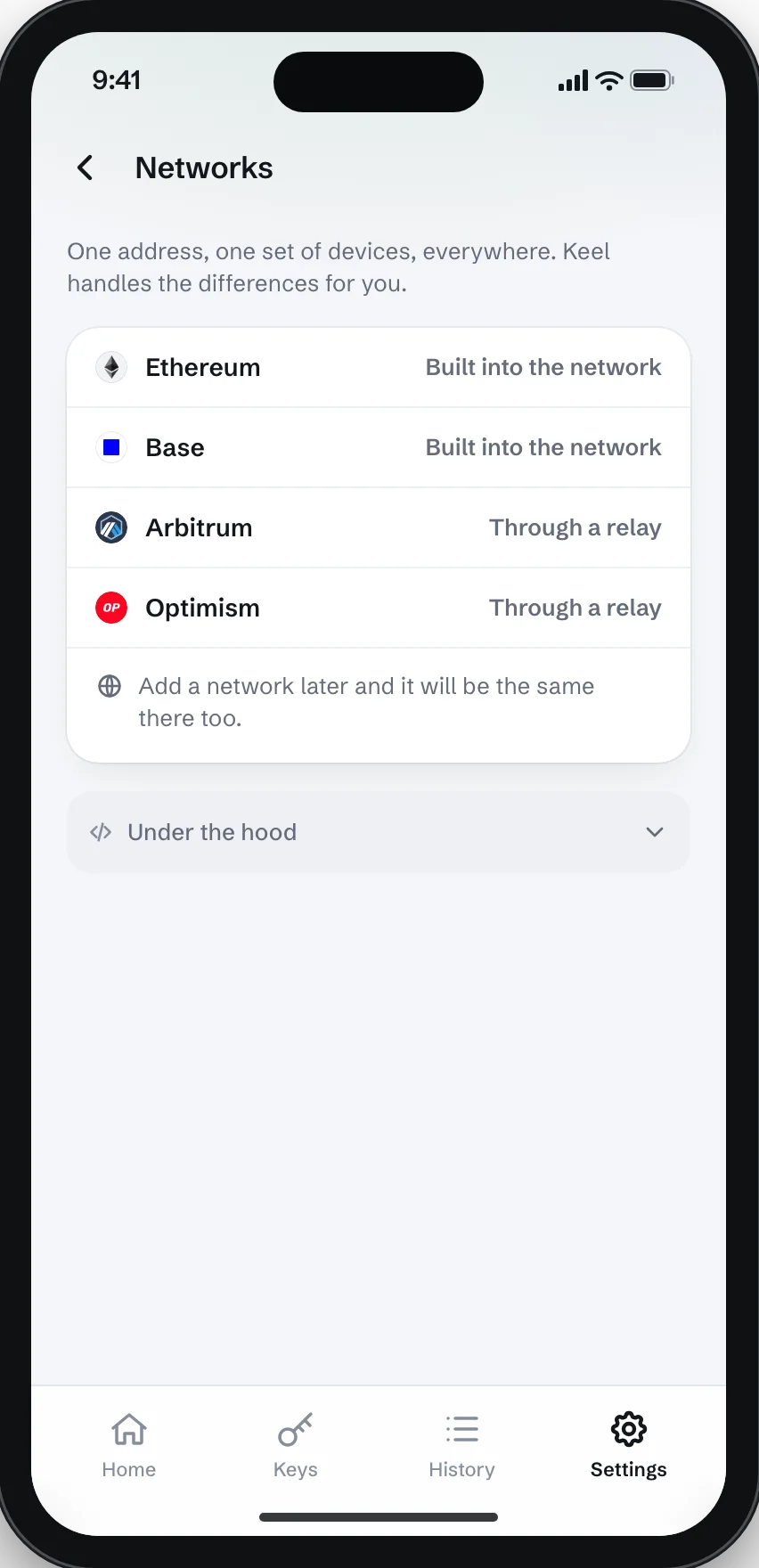
Every chain at once
One key change applies on every chain the account is on.
Approve the result you expect
Getting drained is the biggest risk of holding your own keys. A co-signer can refuse a bad transaction before it counts, and the chain reverts any result you didn’t approve.
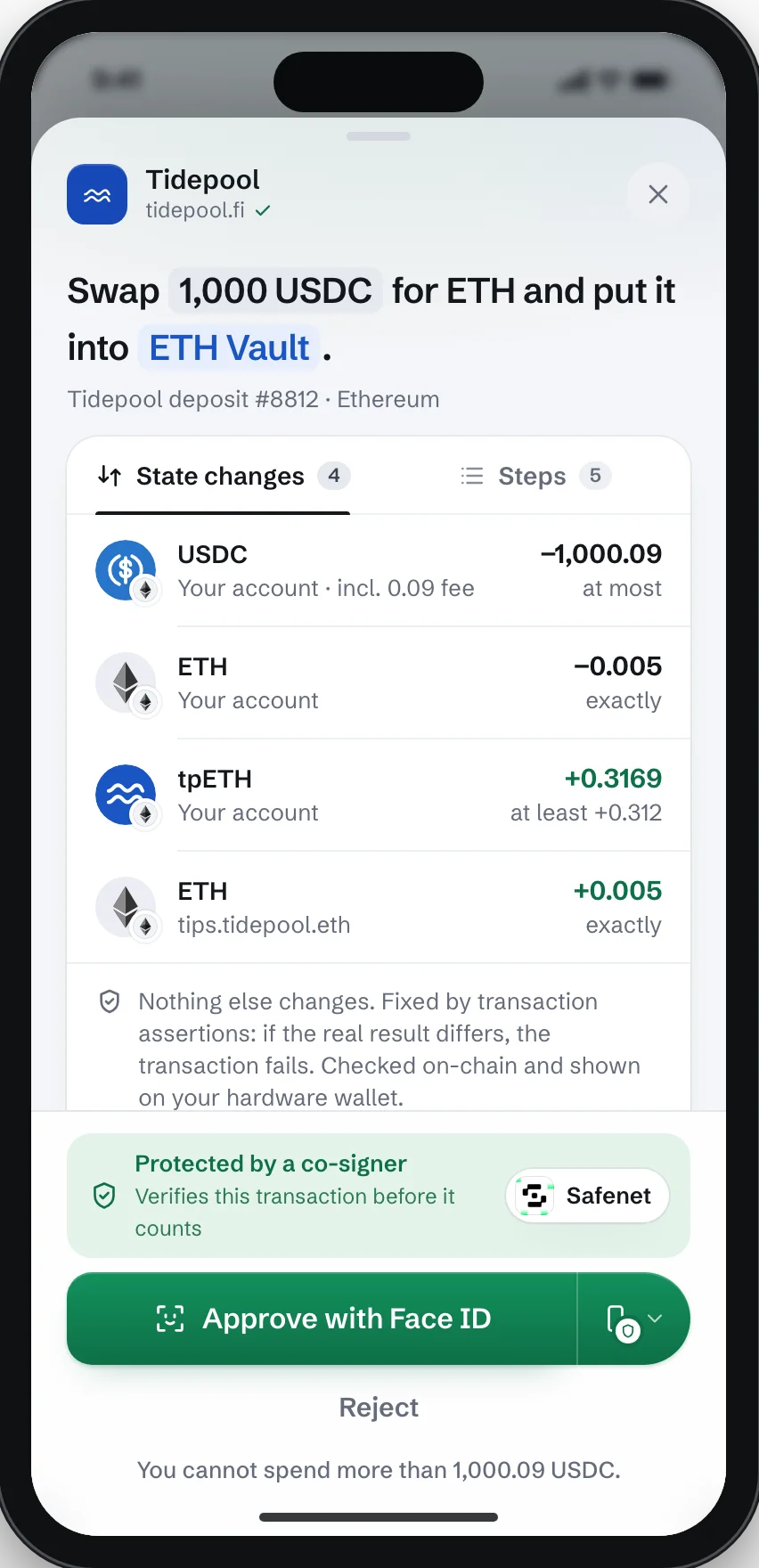
Transaction assertions
Your wallet simulates the transaction and turns the result into assertions. If anything else changes, the chain reverts it.
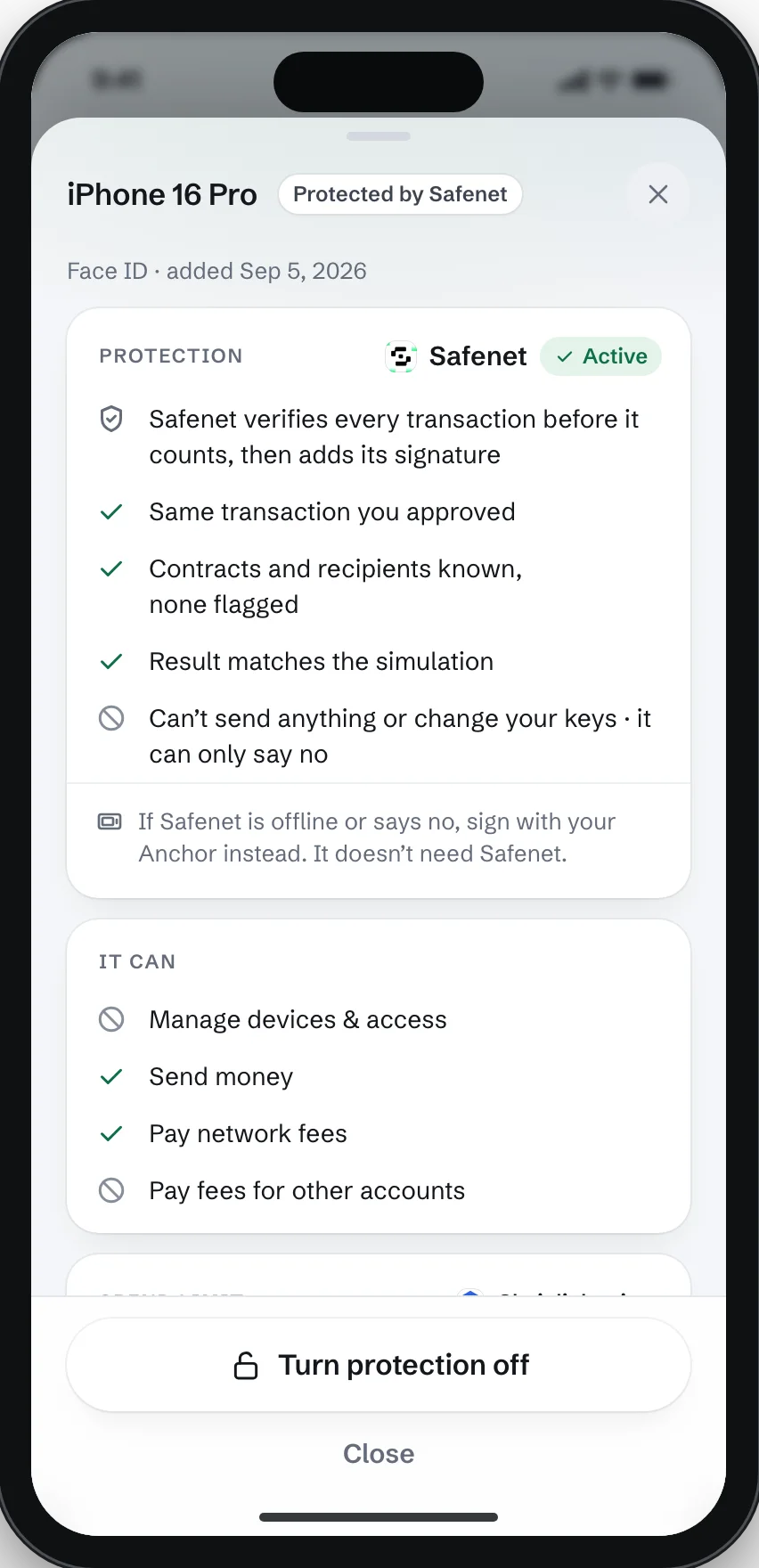
Security co-signer
A shared threshold authenticator lets your key and a security service sign as one. The service screens each transaction and can refuse.
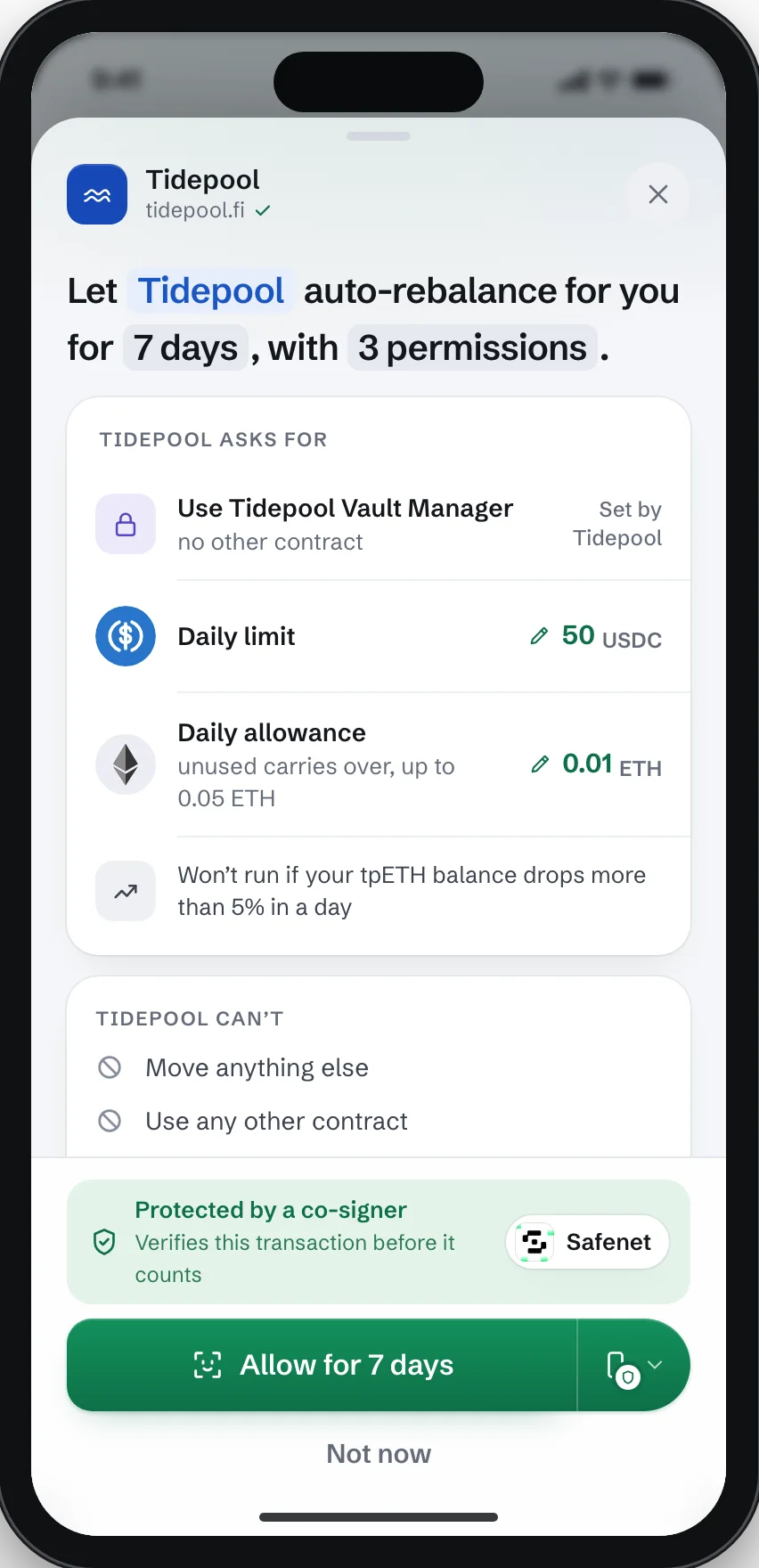
App permissions with limits
Give an app a cap and an end date, like 50 USDC a day for a week.
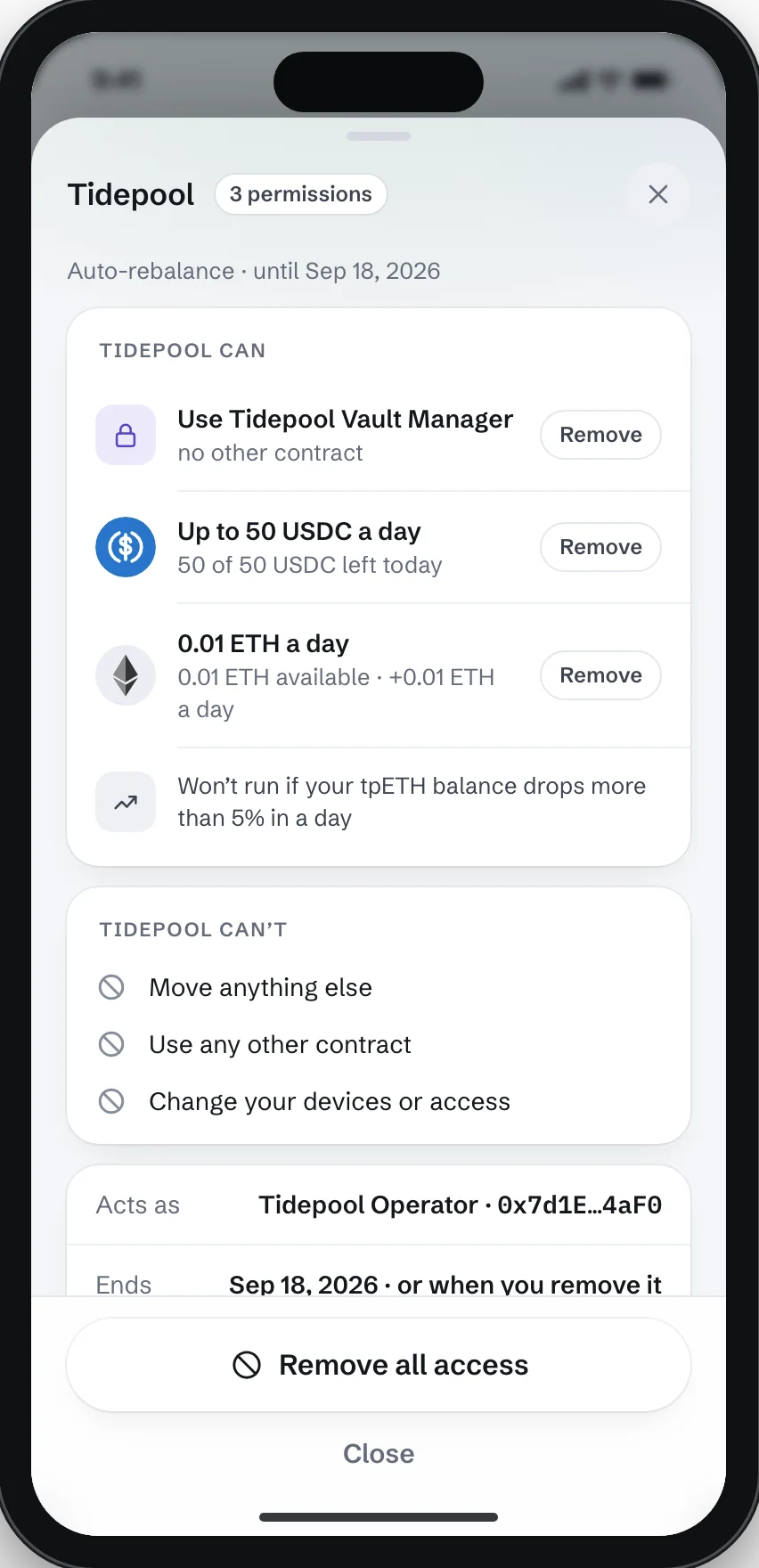
Remove access from any wallet
Any wallet that opens the account can see and revoke what an app may do.
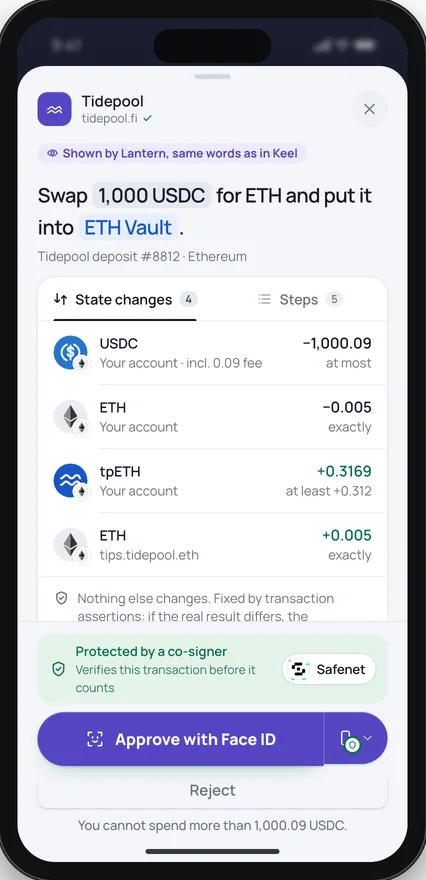
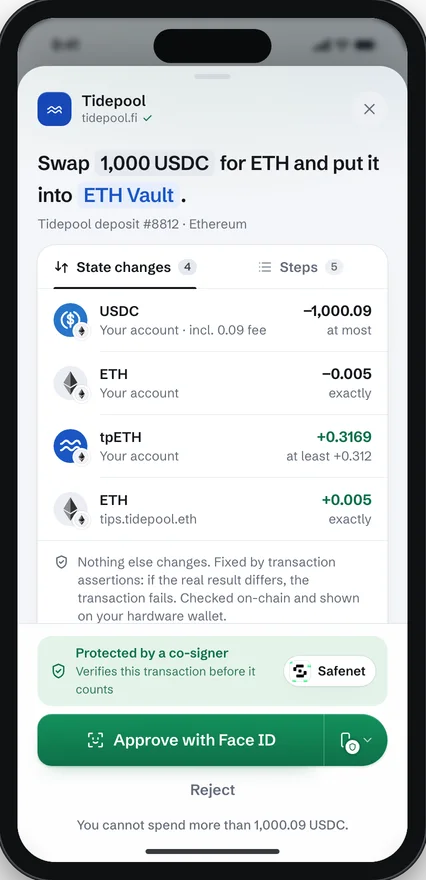
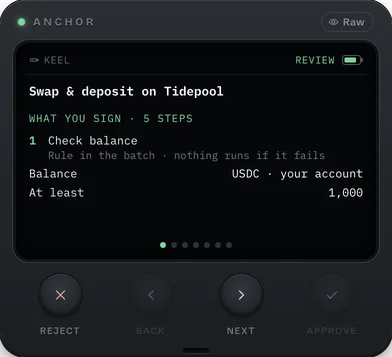
Read every transaction on your hardware wallet
A hacked web page can show one thing and ask you to sign another, which is how Bybit lost about $1.5 billion in 2025. PACE includes clear signing metadata for every operation, so the hardware wallet decodes the transaction itself and a hacked screen can’t fool you.
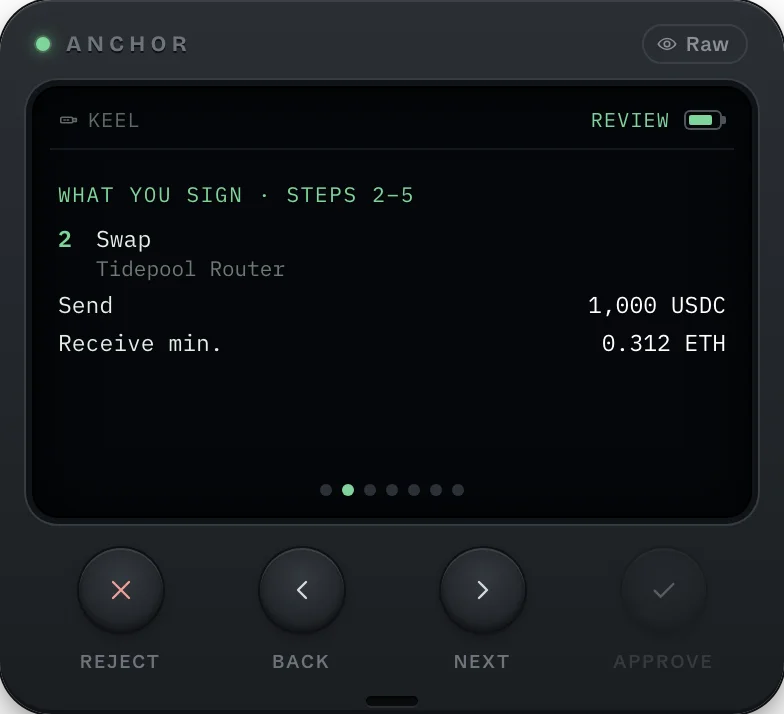
Every step in words
The device walks through the batch one call at a time.
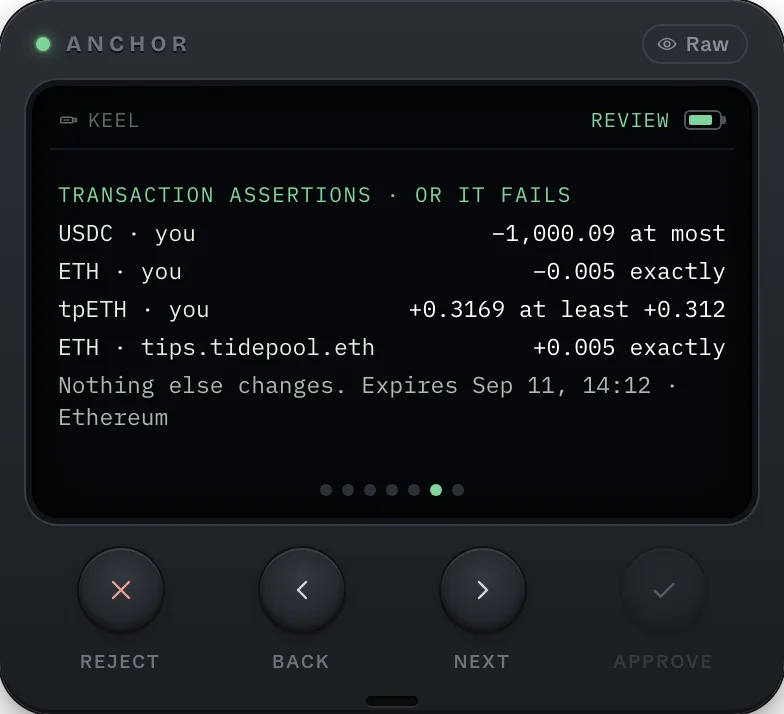
Assertions on the device
Before you approve, it lists the checks, like at most 1,000 USDC out.
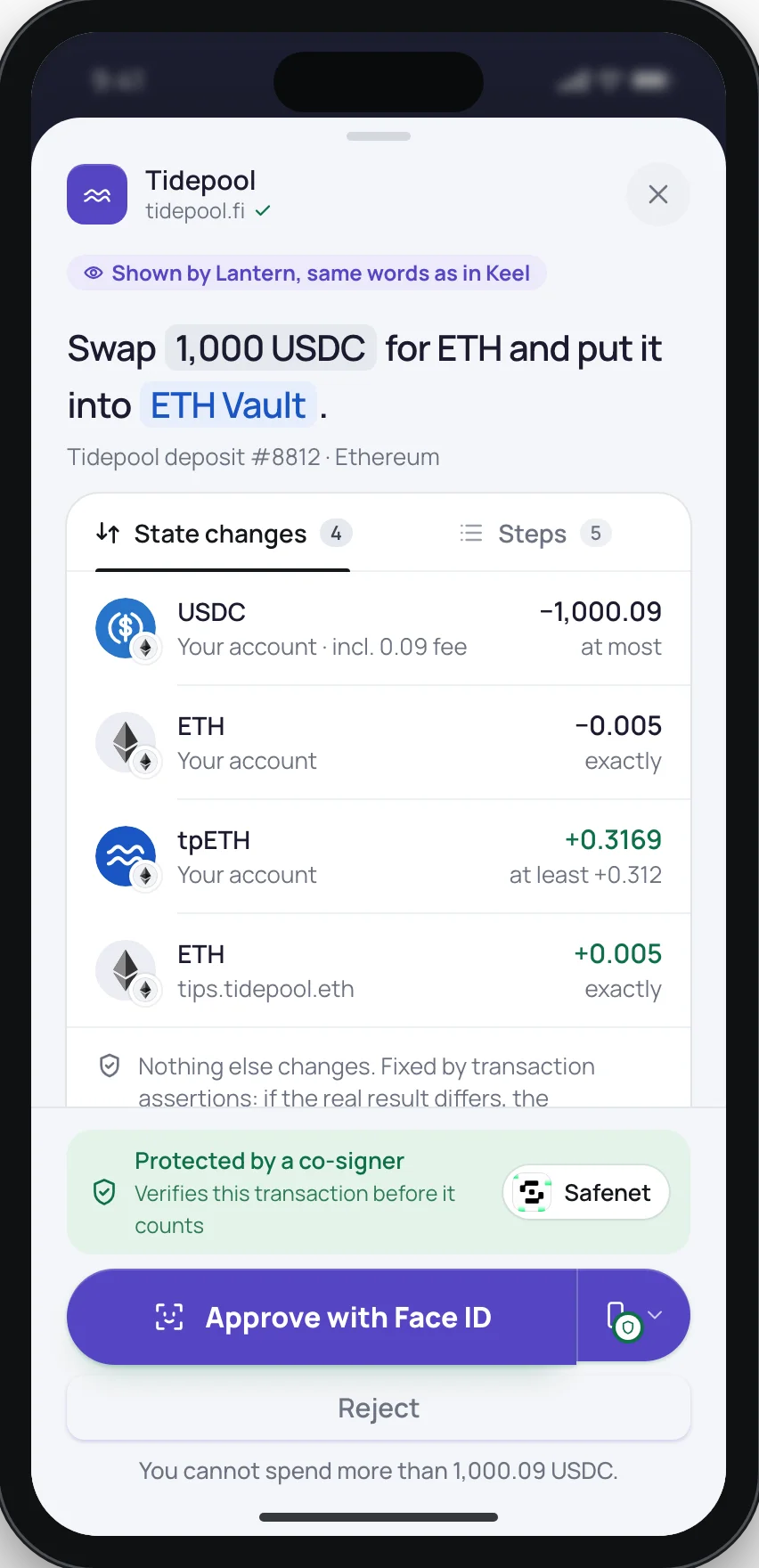
Same words in every wallet
Each kind of call has one shared description, so every wallet and device uses the same words.
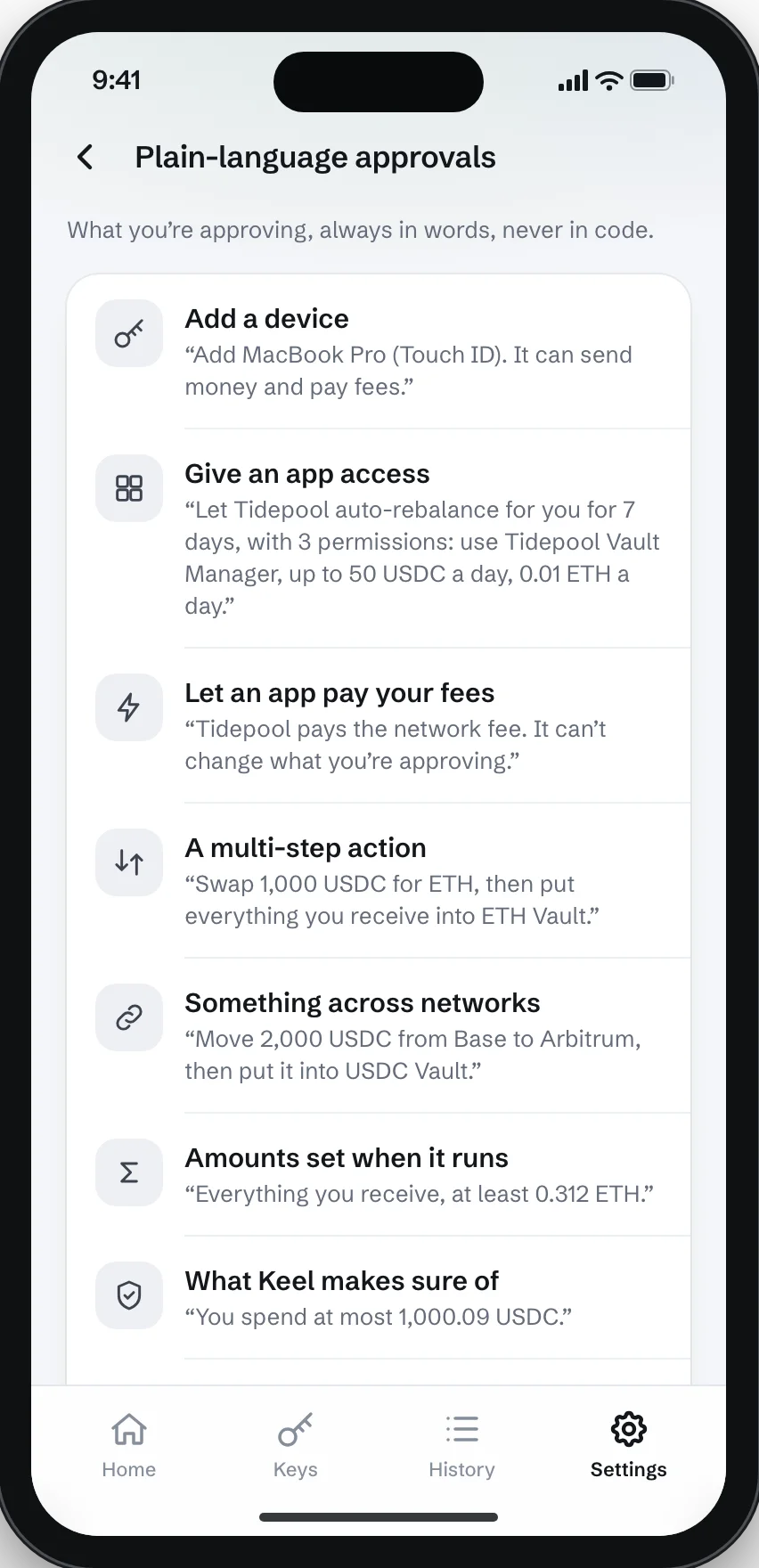
Words for every kind of action
Adding a device or giving an app access shows in plain words, never as code.
Use Ethereum like a banking app
Passkeys, batches and sponsored gas come from EIP-8130, so they work in every wallet.
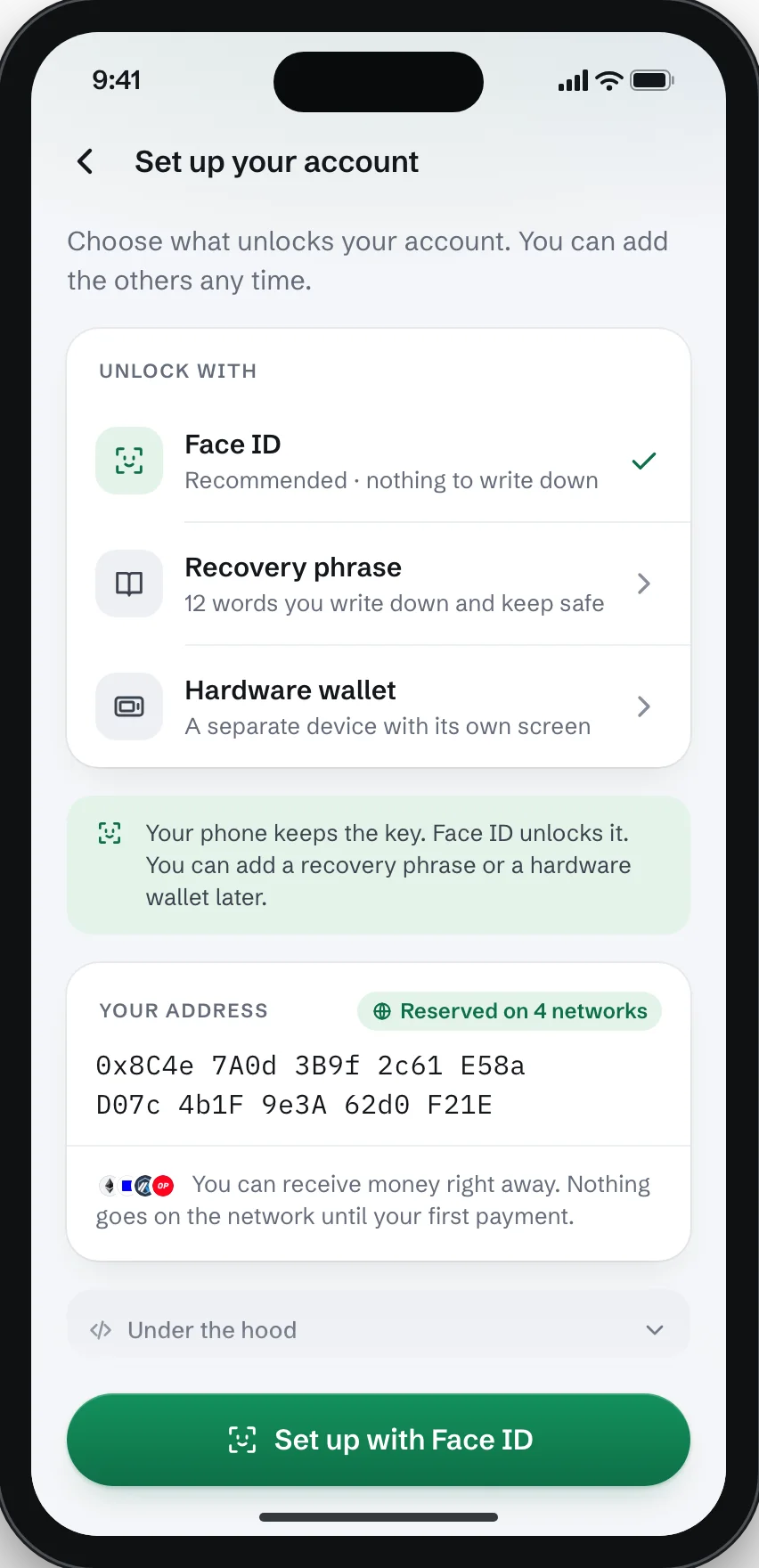
Passkey signing
Sign with Face ID. The key never leaves the phone.
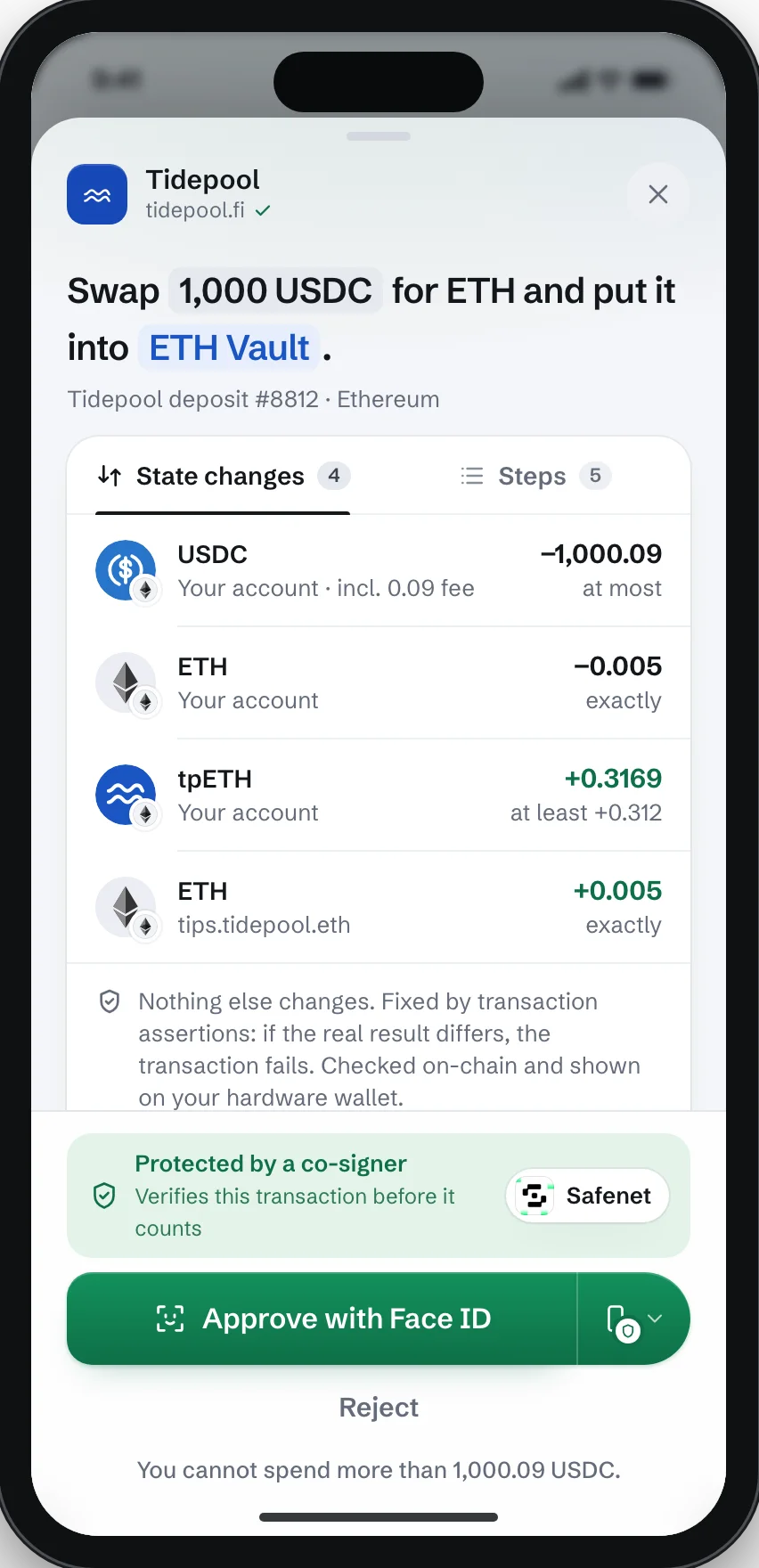
One signature for the whole batch
Approve, swap and deposit in one transaction.
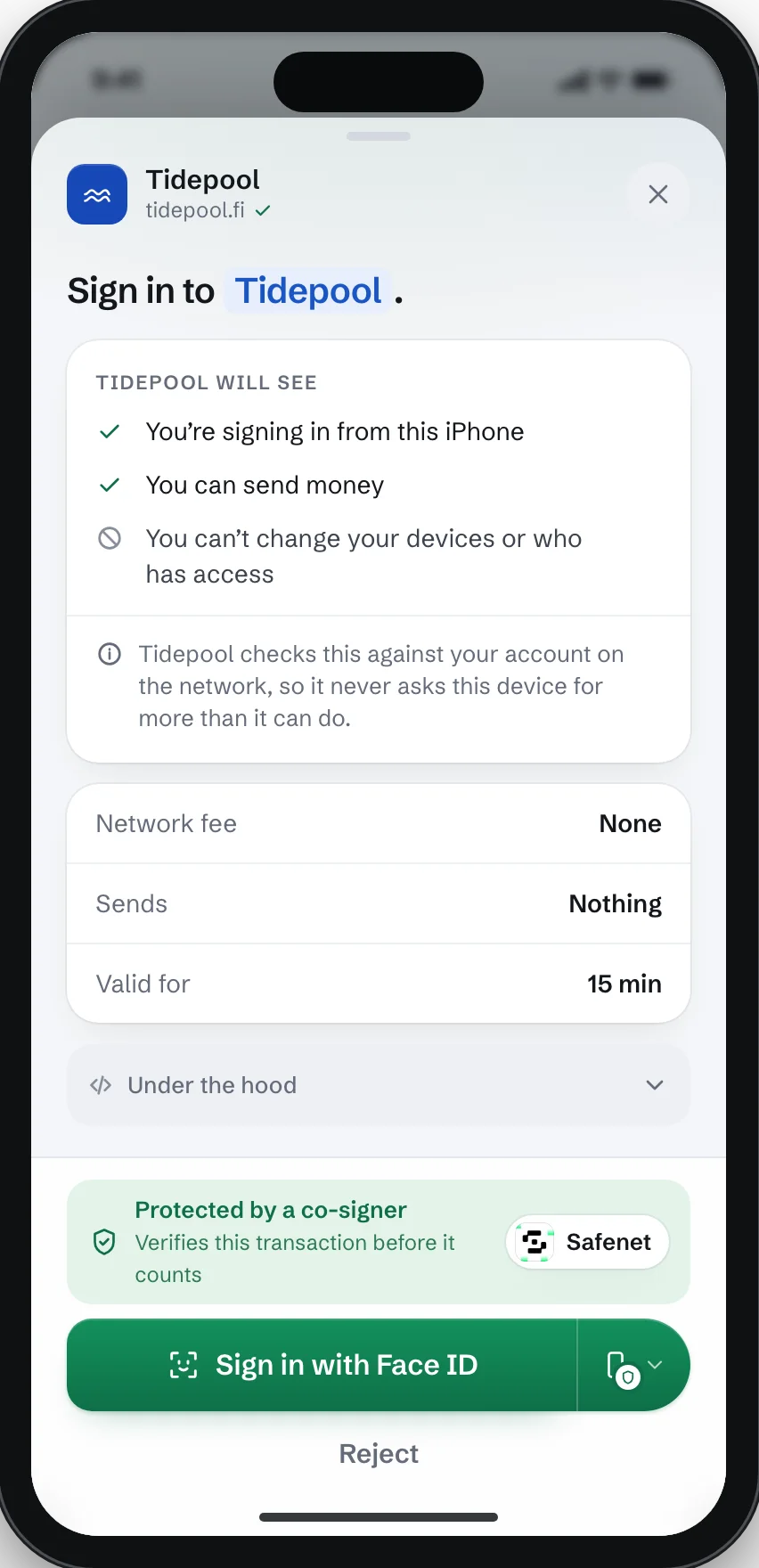
Someone else pays the gas
An app or a sponsor pays the fee, so a new account needs no ETH.
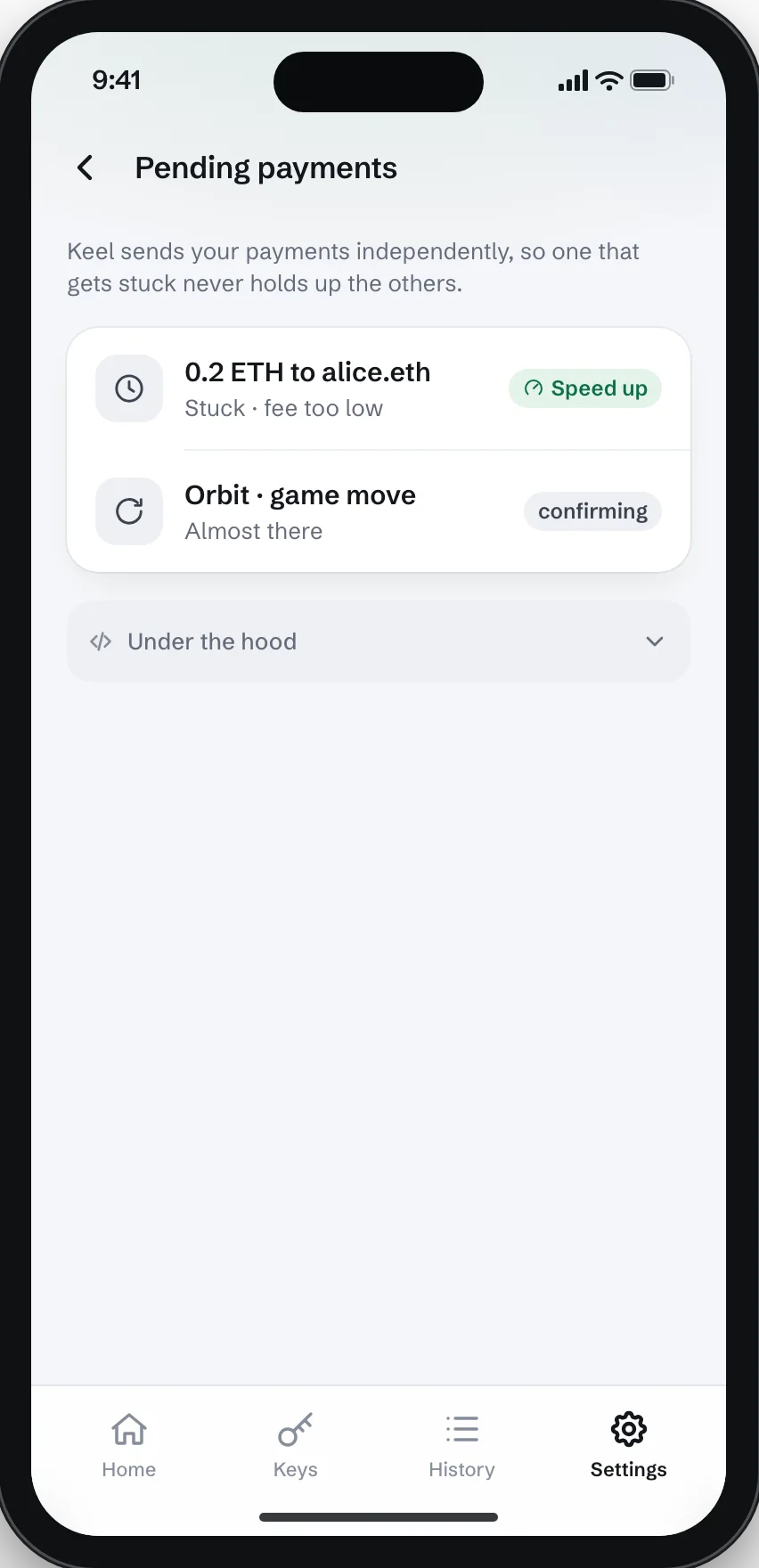
A stuck payment holds nothing up
Payments don’t wait in one line, so a stuck one never blocks the next.
What app builders get
Today an app builds a separate transaction path for each kind of account its users bring, and falls back whenever a wallet can’t do something. With PACE every wallet answers the same way, so the app reasons about one path.
Today: a path for each kind of account
Plain EOA
Approve, then act, with one signature per call and gas paid in ETH.
EOA upgraded with EIP-7702
A batch if the wallet supports it, through code each wallet chose.
ERC-4337 account
A user operation through a bundler, with each wallet’s own modules.
Every wallet in between
Its own answer on sponsored gas, app permissions and receipts.
Each path needs its own code, its own tests and a fallback for what a wallet can’t do.
With PACE: one path
Send
One
wallet_sendCalls, with phases, a gas payer and assertions.Ask for access
One ERC-7715 request, used through ERC-7710.
Read the result
The same receipt on every chain, including a failed assertion.
Check the chain
One
wallet_getCapabilitiescall says what holds there.
Every wallet that ships PACE runs it the same way, including for EOAs that upgrade in place.
What a wallet can add
These aren’t part of PACE. A wallet adds them on top, and other wallets can still see them even when they can’t use them.
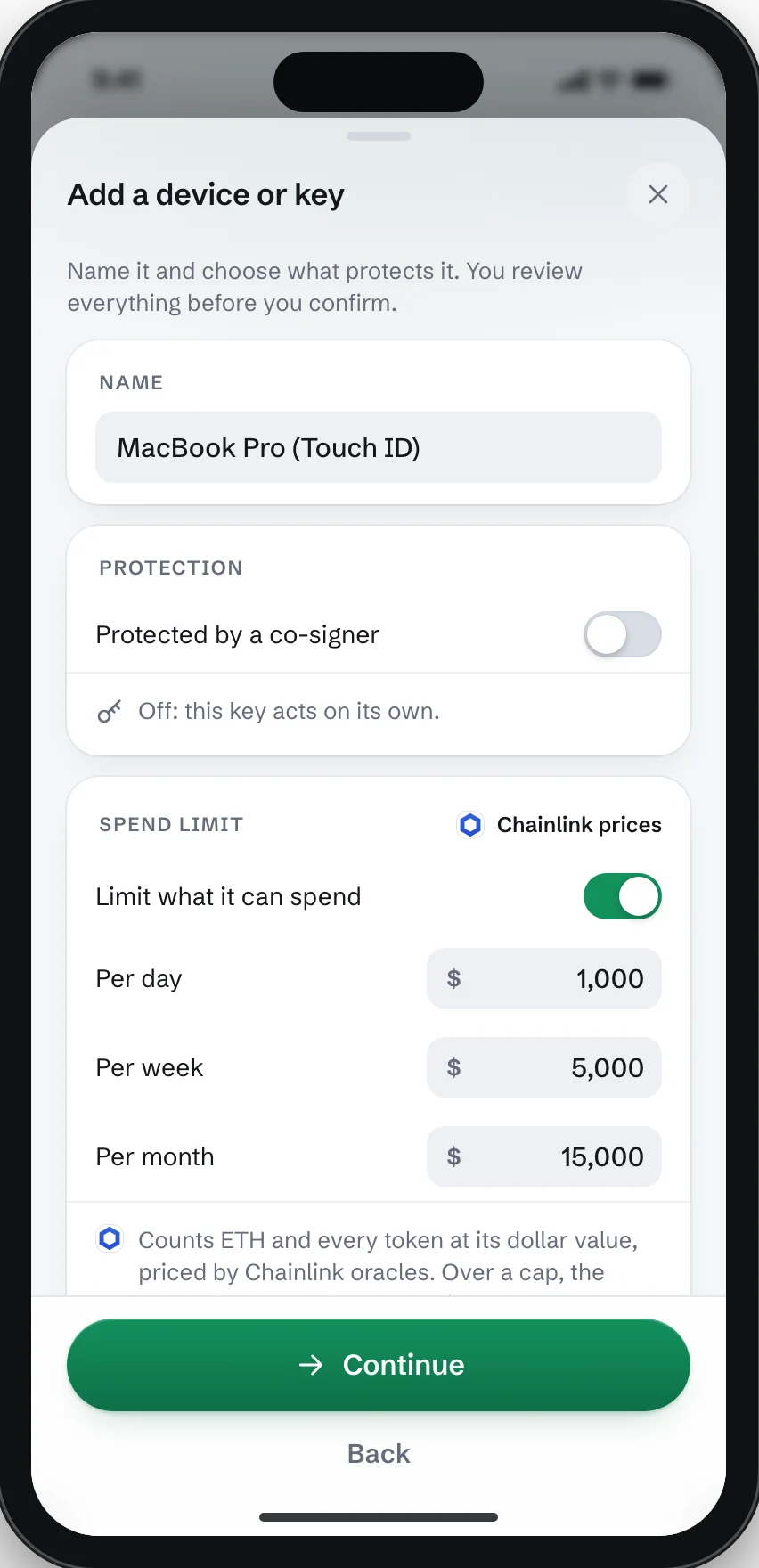
Spending limits
Cap what a key spends per day, week or month.
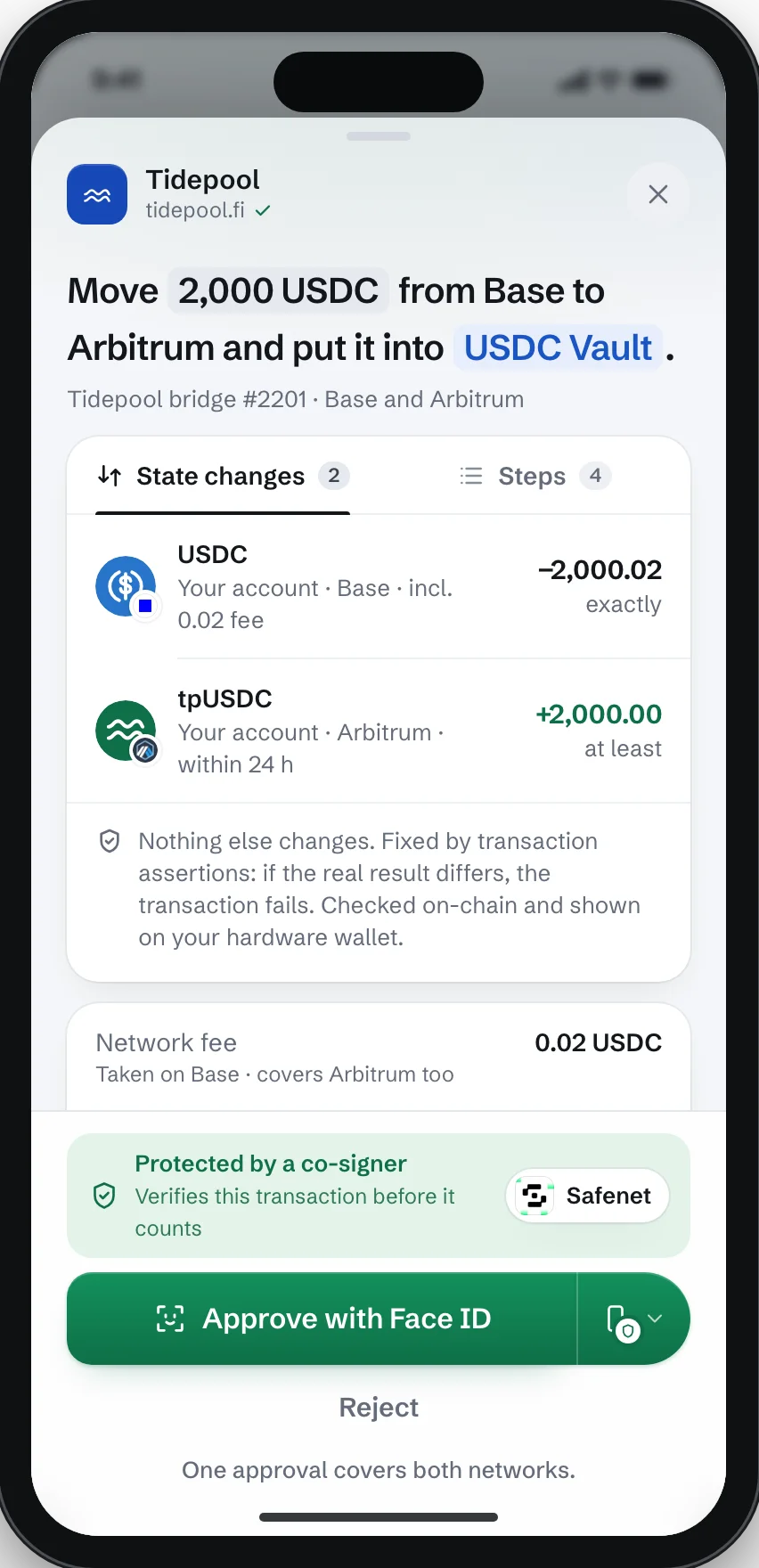
Cross-chain in one approval
Move USDC from Base to Arbitrum with one signature.
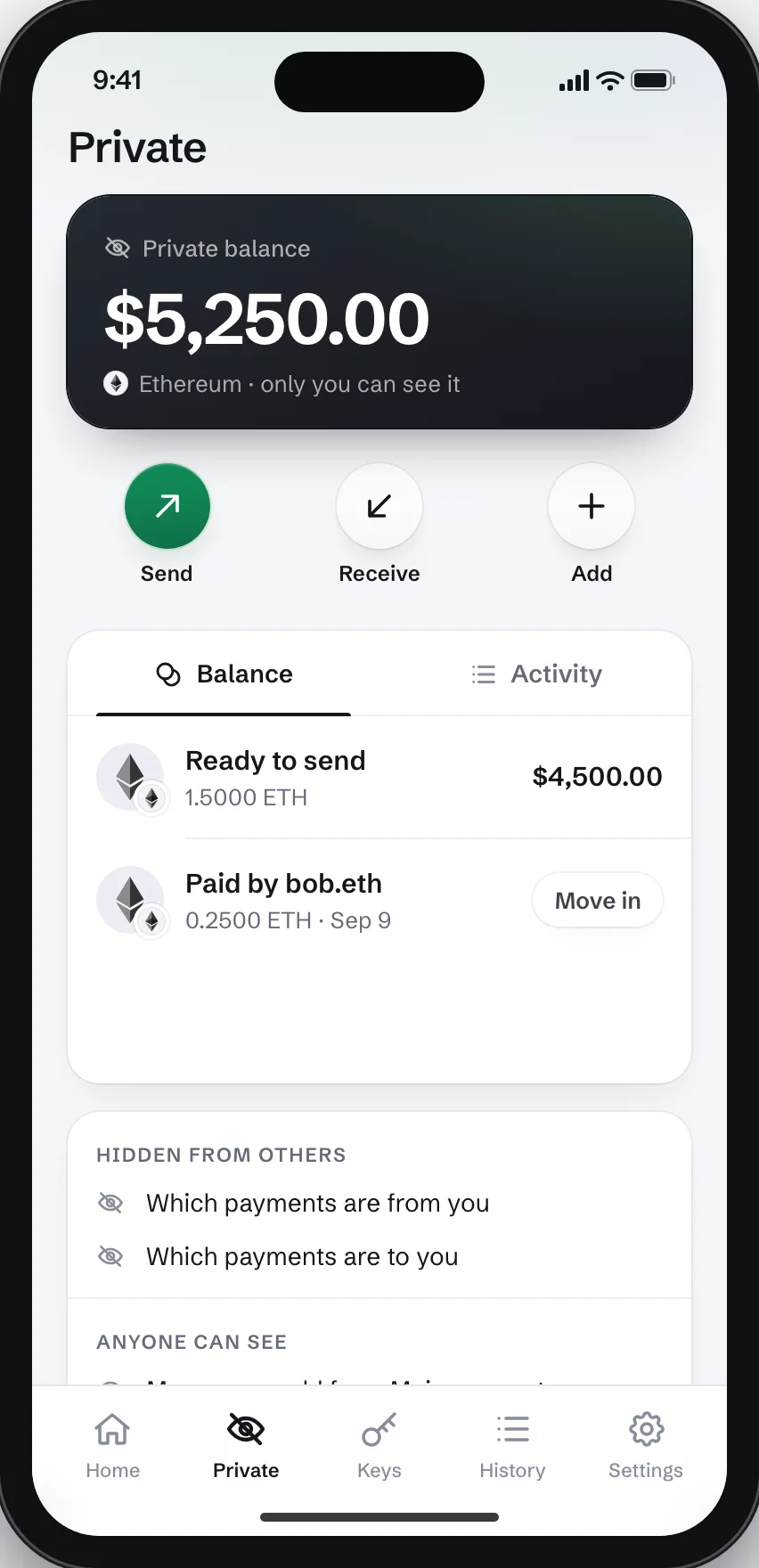
Private balance
Hold ETH in a shielded pool and pay without linking back to your account.
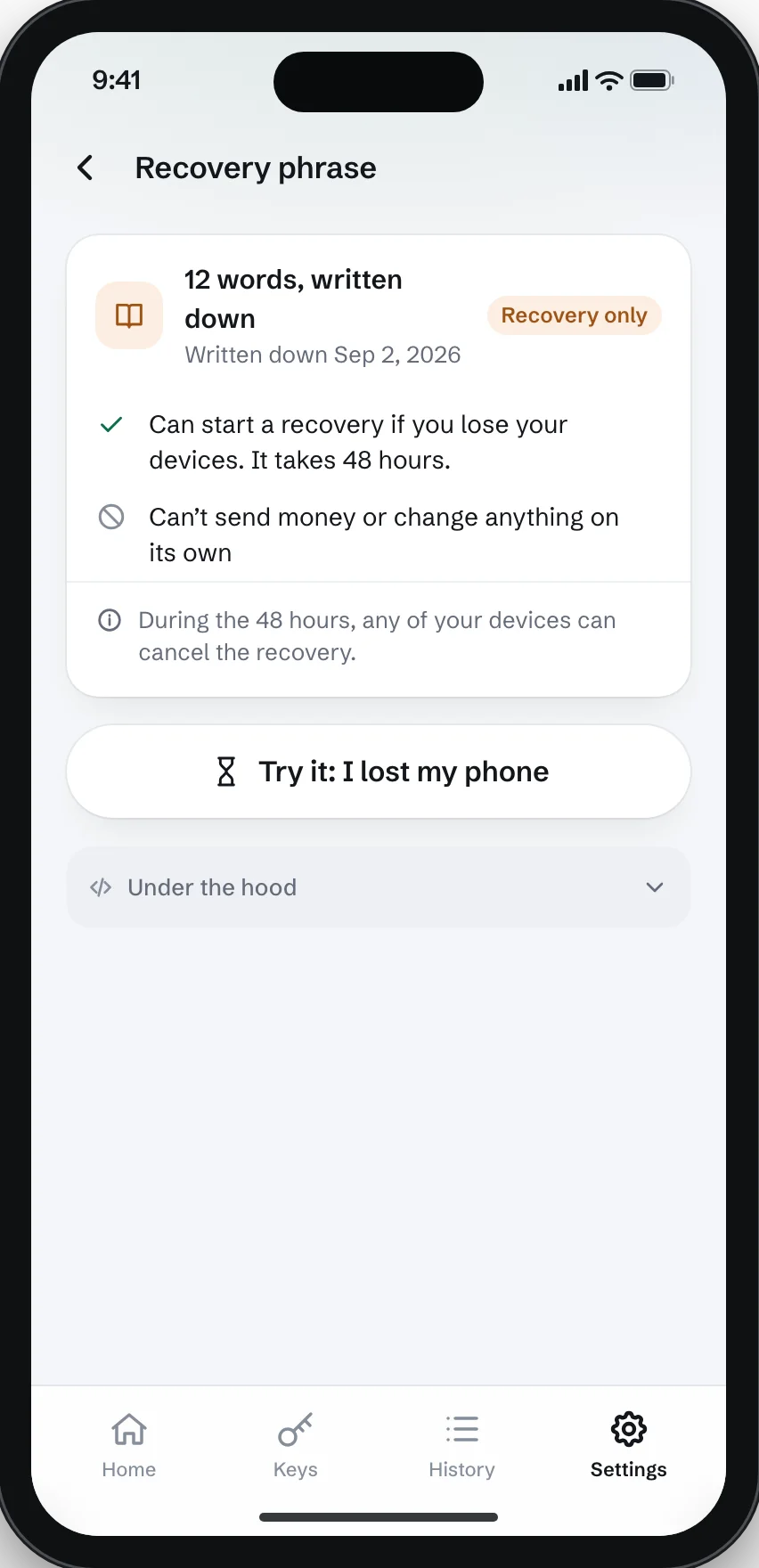
Keys from a recovery phrase
Rebuild your keys on a new device from a 12-word phrase.
The road to Hegotá
The goal is every wallet shipping PACE by default when Hegotá activates.
Out now
Public draft
The ERC and the interactive mockup.
In progress
Working group
Wallet, client, hardware, security, explorer and EF teams.
Next
Devnet deployment
Reference contracts on an EIP-8141 test network.
After devnet
Revised draft
Feedback goes in, and anything that doesn’t have to be shared moves to extensions.
Hegotá testnets
Testnet deployment
Public gas benchmarks on the Hegotá testnets.
Before mainnet
Audits and formal verification
Two independent audits of the account.
Hegotá activation
Mainnet launch
A frozen v1 with migration guides.
Ethlabs builds the contracts through v1 and organizes the working group.
Help decide what goes into PACE before Hegotá.
If you build wallets, apps, hardware wallets or tools, tell us what PACE is missing or what should be an extension. Joining the working group is how you get a say.
- Project
- PACE: Portable Account Core for Ethereum
- Number
- ERC-XXXX
- Status
- Draft, open for comment
- First draft
- 21 Sep 2026
- Target
- Hegotá
- Drawn by
- Ethlabs
- Reviewed by
- your team?
Acknowledgements
Keystore AccountsEIP-8130
C. Hunter
Execution permissionsERC-7715
L. Isailovic, D. Rein, D. Finlay, D. Chiang, F. Makarov,P. Gomes, C. Swenberg, L. Rosario, I. Bowman, J. Smale
Smart contract delegationERC-7710
R. McPeck, D. Finlay, R. Dawson, D. Chiang
Transaction AssertionsEIP-7906
A. Forshtat, S. Nacson, D. Tirosh, Y. Weiss, F. Svantes
Frame TransactionEIP-8141
V. Buterin, lightclient, F. Lange, Y. Weiss, A. Forshtat,D. Tirosh, S. Nacson, D. Chiang, T. Wahrstätter, S. Vlachakis
Clear SigningERC-7730
L. Castillo, D. Rein, P. Aoun, A. Galansky,B. Rozwarski, K. Uzdogan, Fredrik, A. Forshtat
Wallet Call APIERC-5792
M. Salem, L. Rosario, W. Cusack, D. Tirosh, J. Moxey, D. Rein, A. Forshtat,S. Wilson, B. Itskov, J. Tavares, A. Fuller, P. Liao, bumblefudge
Recent RootsEIP-8272
T. Thiery, V. Buterin, T. Wahrstätter, lightclient
Smart BatchingERC-8211
M. Javor, F. Dujmusic, F. Makarov, V. Rajendran
Crosschain EIP-712ERC-7964
E. Garcia
User operationsERC-4337
V. Buterin, Y. Weiss, D. Tirosh,S. Nacson, A. Forshtat, K. Gazso, T. Hess